
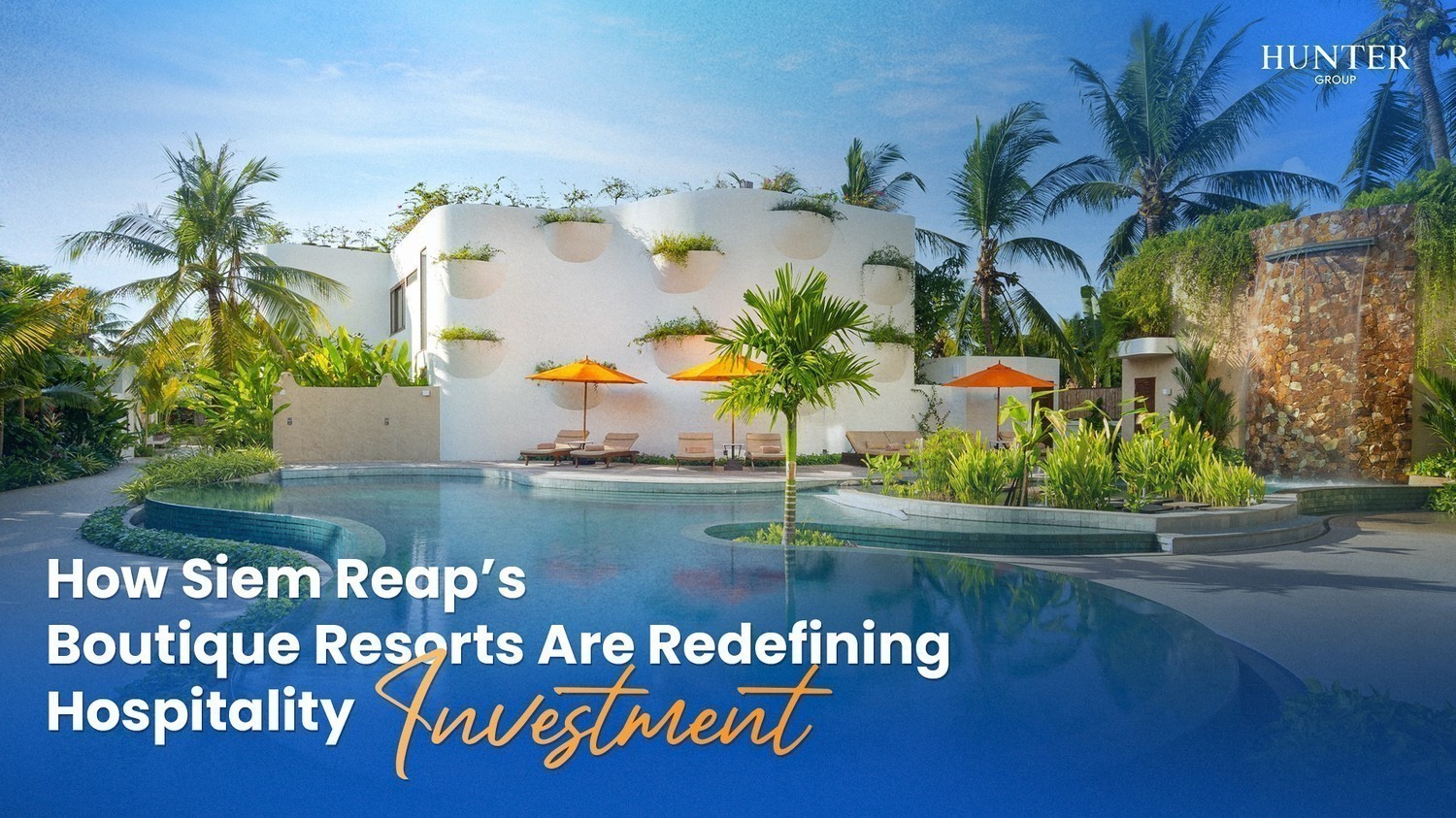
Boutique Resorts Are Redefining Hospitality Investment in Siem Reap
In hospitality investment, success is often equated with scale. But in Siem Reap, a quieter model is outperforming expectations.
Small, thoughtfully designed boutique resorts are proving that alignment with traveler behavior requires lower capital, operates with leaner teams, and taps directly into one of the fastest-growing global shifts: wellness, intentional travel, and lifestyle-driven stays.
From Tourism Gateway to Lifestyle Destination
For years, Siem Reap was known primarily as Cambodia’s tourism gateway. Today, it is steadily evolving into a lifestyle destination. Visitors still come for the temples, but many stay longer to slow down, recharge, and reconnect with a sense of balance.
This shift reflects a broader change in travel behavior. More travelers are seeking restorative, meaningful experiences rather than fast-paced itineraries.
More importantly, a growing number of people are extending their stay, returning frequently, or relocating to Siem Reap.
Several key factors attracting people to Siem Reap, including:
• Cheaper Alternative to Regional Cities: Compared with Bangkok or Bali, Siem Reap offers a relatively lower cost of living, including rent, land prices, food, and other daily expenses.
• Living Environment and Green Space: With low-density neighborhoods, riverfront areas, and greenery, Siem Reap provides a calmer environment and a slower pace of life.
• Lifestyle Balance: Siem Reap is a culturally rich city with an active café culture, creative communities, short commutes, and easy access to nature.
A Small Project with a Clear Purpose
WAKA Villa reflects this transformation. Set within a quiet, green setting, the property offers guests a space to pause and reset. Its three-room types accommodate solo travelers, couples, and families, balancing simplicity with thoughtful design.
Launched in 2018, the project began with a modest yet meaningful goal: to contribute to the Siem Reap community and support local livelihoods. WAKA Villa Private Resort & Spa provided jobs to over 100 construction workers during the economic hardship of the COVID-19 period. What started as a socially driven initiative has matured into a sustainable hospitality asset.
What Is Driving the Shift
Three forces are shaping demand:
• Wellness and intentional travel: demand continues to strengthen as travelers prioritize mental well-being, nature, and slower experiences over conventional sightseeing. A recent Booking.com survey found that around 23% of travelers prefer quieter hobbies while on vacation, seeking restorative rituals and slower rhythms.
• Nature-centered travel: the same survey reports that 43% of travelers prefer vacations close to nature, reinforcing demand for green, low-density stays.
• Social media influence: narratives such as “Life hurts, Siem Reap heals” have helped position Siem Reap as a mindful retreat for young Cambodians and regional visitors seeking rest and recalibration.
Market Signals Supporting the Trend
Global indicators reinforce this direction. According to the Wellness Tourism Report 2026, the wellness tourism reached $974 billion in 2025 and is projected to grow to $1 trillion by 2026, signaling sustained interest in wellness-oriented travel.
Domestically, momentum is also rising. In the first nine months of 2025, 2.6 million local travelers visited Siem Reap, a 71% increase compared with the same period in 2024. This growth in domestic travel helps stabilize demand beyond traditional international tourism cycles.
Where Demand Is Coming From
Boutique villas and wellness-focused stays are seeing consistent occupancy from distinct travel segments, including:
• Weekend travelers from Phnom Penh
• Digital nomads & remote professionals
• Wellness-focused international visitors
Short reset trips from Phnom Penh residents and repeat visits from local travelers are supporting year-round demand. Increasingly, guests prioritize privacy, greenery, and curated experiences over large hotel environments, giving small-scale resorts a competitive advantage, helping sustain occupancy beyond peak tourist seasons.
What This Means for Investors
The success of projects like WAKA Villa reflects a structural shift in the hospitality investment landscape.
Small, well-positioned properties can generate stable long-term income without the capital intensity and operational complexity of large hotels. Developments that integrate wellness, privacy, and local authenticity are more likely to attract repeat guests, secure direct bookings, and build brand loyalty.
For investors, this points toward a growing opportunity, including experience-led micro-destinations that combine financial return with long-term asset value.
Investment Scope and Capital Considerations
For investors evaluating boutique hospitality projects, capital requirements are significantly lower than those of full-scale hotel developments. Small villa resorts typically involve:
Land acquisition
Depending on location and accessibility, land costs vary widely, with areas slightly outside the urban center offering more favorable entry prices.
• Sala Kamreuk: A prime location driven by its established expat community, vibrant café and restaurant scene, and proximity to international schools, supporting consistent residential and short-stay demand. Land prices typically range from $350 to $1,200 per m² for plots near main roads and tourist corridors.
• Svay Dangkum: Extending from National Road 6 toward the Siem Reap River, this district includes high-traffic zones near Pub Street, night markets, hotels, and dining clusters, making it attractive for hospitality visibility and guest convenience. Land prices vary widely, generally ranging from $200–$2,000+ per m², depending on frontage and proximity to commercial activity.
• Sla Kram: Located just outside the city centre, Sla Kram offers a quieter environment with existing boutique properties, government offices, and abundant greenery, appealing to guests seeking privacy and a retreat-style atmosphere. Land prices typically range from $250–1,000+ per m², with premium plots commanding higher values.
Construction and design
Low-density layouts, natural materials, and open-air concepts can reduce structural costs.
Construction costs vary depending on the concept and the materials, with price ranges including:
• Standard quality villa builds: starting from $350/m²
• Premium boutique quality: starting from $420/m²
Cost efficiency strategies include:
• Climate-responsive design to reduce AC load
• Natural ventilation and shading
• Local materials and craftsmanship
• Open layouts reduce structural complexity
Guests value atmosphere and comfort more than expensive finishes while enhancing guest experience.
Furnishing and landscaping
Thoughtful landscaping, greenery, and simple interior design often deliver higher perceived value than high-cost luxury finishes.
Typical allocation includes:
• Furniture & interiors
• Landscaping & greenery
• Pool & water features (optional)
Greenery and outdoor spaces significantly increase perceived value and guest satisfaction.
Operational setup
Boutique properties often don’t require many staff due to the small number of rooms.
Typical staffing includes:
• 4–8 units: 4–6 staff
• 10–15 units: 15–20 staff
Monthly operational costs include:
• Salaries
• Utilities & internet
• Cleaning & maintenance
• Booking platform commissions
Lean staffing improves margins, but service consistency remains critical.
Risks and Considerations
Experience-driven hospitality depends heavily on reputation and service consistency. Therefore, maintaining quality, clear positioning, and strong marketing and branding is essential to sustaining occupancy.
Competition in boutique accommodations is increasing, and projects without strong differentiation may face pricing pressures. Seasonality and external tourism shocks remain factors, making a solid domestic market base important for income stability.
As Siem Reap’s hospitality landscape evolves, successful projects depend not only on vision but on local insight, regulatory clarity, and execution expertise.
At Hunter Group, we work with investors to navigate site selection, feasibility, development planning, and market positioning, helping turn ideas into resilient, profitable hospitality assets. For investors exploring boutique property investments in Siem Reap, the right partner can make the difference between concept and a long-term performing asset.
source:
- The Ministry of Tourism
- Global Wellness Report 2026
- Booking.com
- KEH Construction
- Hunter Estate
- Realestate.com.kh
- Harbor Property
By Sreyneth Kem
Project Marketing & Communication