
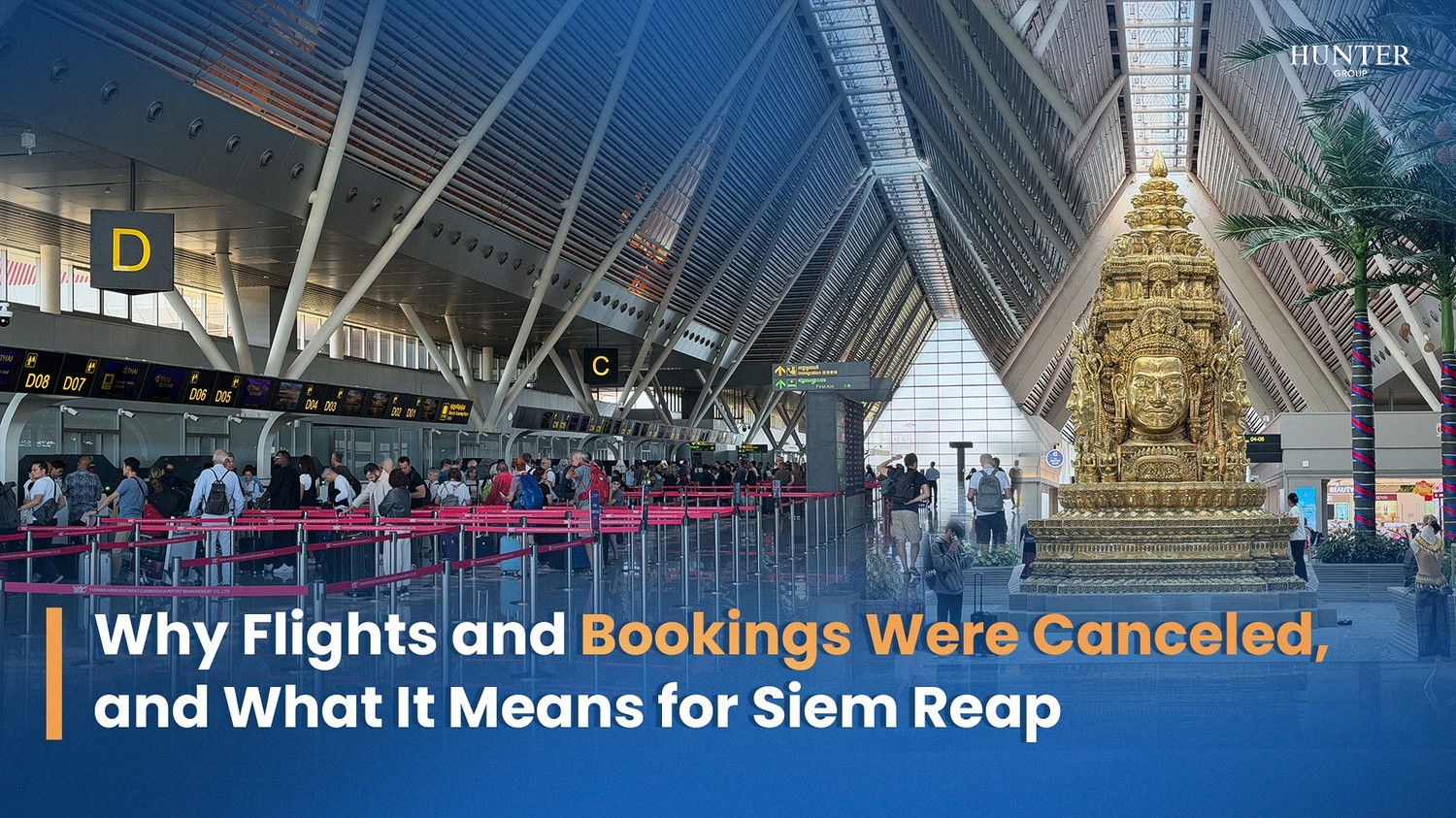
Why Flights and Bookings Were Canceled, and What It Means for Siem Reap
Over 120,000 foreign tourists arrived in Siem Reap in December 2024. In 2025, however, Siem Reap experienced a decline in tourist arrivals, as reservations and flight cancellations persisted, driven largely by growing regional uncertainty rather than on-the-ground conditions.
The renewed border conflict between Cambodia and Thailand, following the October ceasefire agreement, displaced more than half a million Cambodians once again. As news of the clashes spread, safety concerns increased among travelers planning trips to Cambodia, particularly to Siem Reap. This heightened perception of risk led to flight cancellations and a slowdown in visitor arrivals, even though the clashes occurred far from major tourist destinations.
The impact has been felt across the tourism sector, with December figures showing:
• A 20% hotel cancellation rate at Sky Park Condotel in Siem Reap during the first two weeks of December.
• A 29.8% decline in Angkor Entrance Pass sales compared to the same period in 2024, dropping from 125,349 to 87,936 tickets.
The ripple effect has also reached small local businesses. The Straits Times reported that souvenir shop owner Ms. Pheng Tittararaksmey experienced a 40% decline in revenue after the conflict resumed on December 8, 2025, underscoring how quickly uncertainty can affect livelihoods that depend on tourism.
Yet despite the border clashes and lingering concerns, Siem Reap has remained safe and open to visitors. Daily life in the city continues as normal. In response, the Ministry of Tourism and the Cambodia Tourism Board have partnered with business owners, social media content creators, and private-sector stakeholders to promote Siem Reap through the “Still Cambodia” campaign. The goal is not to dismiss genuine concerns, but to reassure travelers by showing the reality on the ground.
While the conflict has raised safety concerns for many travelers, Siem Reap remains safe to visit, with life continuing even during challenging times. What stands out most is the collective response. Tourism authorities, businesses, and individuals have come together not to deny uncertainty, but to share truth, resilience, and hope. The ceasefire on December 27, 2025, has strengthened the outlook for Siem Reap. And while uncertainty may still linger, the city remains as welcoming, beautiful, and enduring as it has always been, and always will be.
By Sreyneth Kem
Project Marketing & Communication