
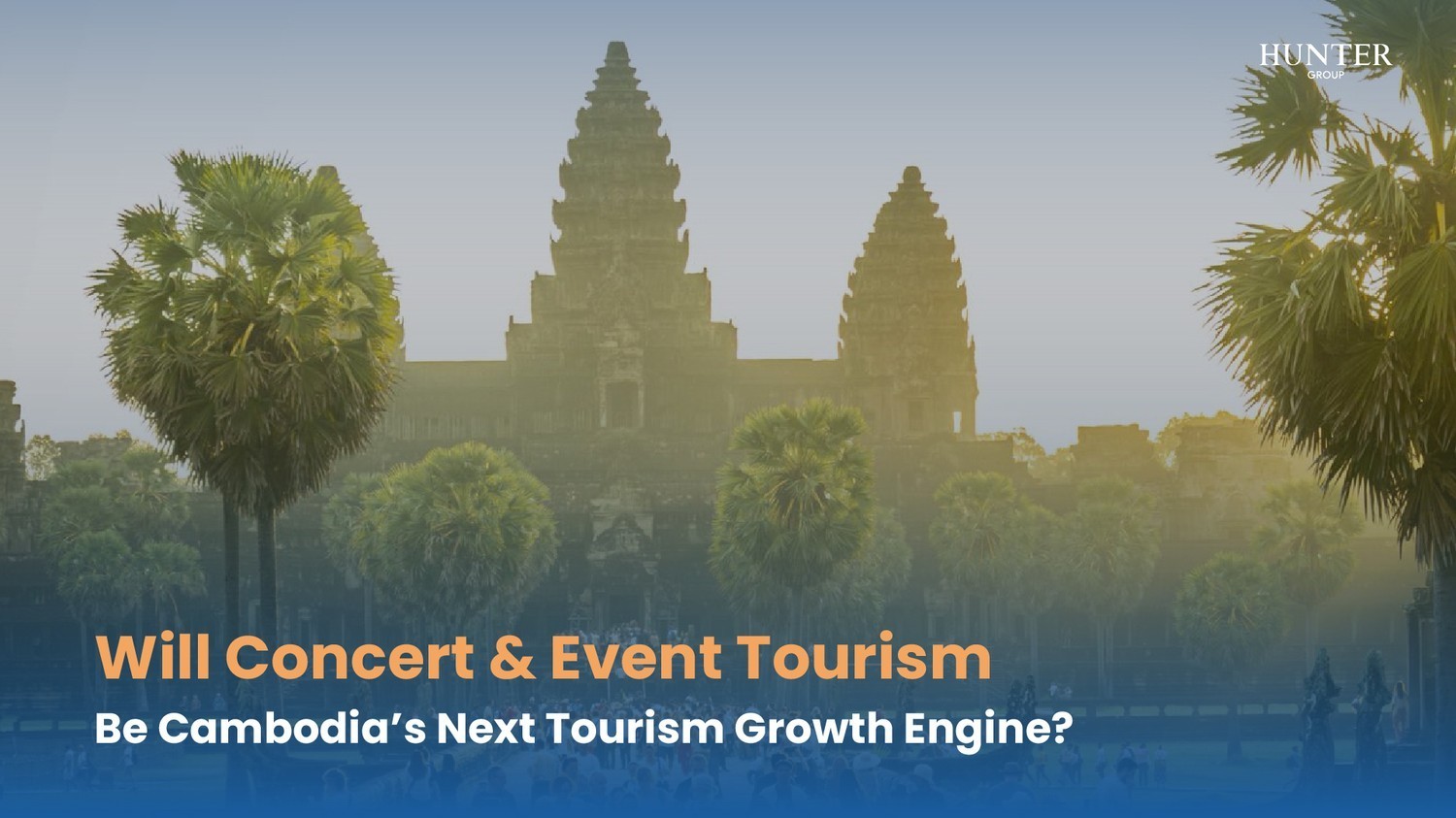
Will Concert & Event Tourism Be Cambodia's Next Tourism Growth Engine?
For decades, tourism success was measured by arrivals. The more visitors a destination attracted, the stronger its tourism industry was considered to be.
Across Asia and beyond, travelers are increasingly choosing destinations based on experiences rather than attractions alone. Concerts, sporting events, festivals, conferences, and cultural gatherings have become powerful travel motivators, influencing where people go, how long they stay, and how much they spend.
For Cambodia, this shift presents a significant opportunity.
The country has already established the foundations of a competitive tourism sector with globally recognized heritage assets, improving connectivity, a fast- growing hospitality ecosystem, and a reputation for warm, authentic service. The next phase of growth may not come from attracting entirely new visitor segments, but from creating more reasons for visitors to stay longer, spend more, and return more frequently.
In this context, event tourism deserves serious consideration as a strategic growth driver.
The Rise of the Experience Economy
Recent industry data points to a clear trend. According to Agoda’s 2026 Travel Outlook Report, concerts and major cultural events have become some of the strongest travel triggers across Asia. Event-driven travelers consistently demonstrate higher spending patterns, often extending their stays and increasing consumption across accommodation, dining, retail, and transportation.
The economic impact can be substantial. Following the announcement of major international concerts, destinations across the region have recorded significant increases in accommodation searches and bookings. These events generate value far beyond ticket sales, creating demand across multiple sectors of the local economy. This phenomenon, which also manifested during Ganzberg’s Supper Idol Concert. The concert has drawn thousands of local and international fans to Koh Pich, creating huge demand for hotels, restaurants, and transportation services.
Unlike traditional tourism activities, which may concentrate spending within a limited number of attractions, large-scale events activate entire ecosystems of businesses—from hotels and airlines to restaurants, retailers, transport operators, and local service providers.
Regional Lessons in Event-Led Growth
Several Southeast Asian markets have already demonstrated how strategic investment in events can strengthen tourism performance and diversify visitor demand.
• Singapore has positioned itself as a regional hub for premium events through strong institutional support, world-class infrastructure, and a coordinated approach to attracting international concerts and sporting events. The result is not simply increased visitor arrivals, but significant economic activity generated within compressed periods of time.
• Thailand has successfully integrated entertainment into its broader tourism offering. Major concerts, festivals, and cultural events complement the country's established leisure sector, helping to sustain visitor demand throughout the year and reduce reliance on seasonal travel cycles.
• Malaysia has focused heavily on MICE tourism—Meetings, Incentives, Conferences, and Exhibitions—while simultaneously expanding lifestyle, culinary, and cultural programming. This strategy has helped attract high-value visitors who often spend considerably more than traditional leisure travelers and frequently extend their trips beyond the primary event itself.
While Cambodia does not need to replicate these models directly, they demonstrate a clear principle, showing destinations that invest in experiences tend to capture greater economic value from each visitor.
Why Cambodia Is Well Positioned to Play the Long Game
Cambodia's competitive advantage does not lie in competing head-to-head with larger regional markets on scale.
Instead, its strength lies in authenticity, cultural depth, and distinctive destinations.
Phnom Penh continues to emerge as a growing business and investment hub, creating opportunities for conferences, exhibitions, and corporate events. Siem Reap offers a globally recognized cultural destination capable of hosting premium lifestyle, arts, and heritage-focused experiences. Coastal destinations such as Kampot, Kep, and Sihanoukville provide natural settings for wellness retreats, culinary festivals, and boutique events.
Together, these destinations create the foundations for a diversified event ecosystem capable of attracting both domestic and international audiences.
Importantly, Cambodia already possesses much of the supporting infrastructure required for growth. Hotels, resorts, restaurants, airports, transportation networks, and tourism services are in place. The opportunity lies in activating these assets more effectively through year-round programming and destination-based experiences.
Investment Case for Investors
For developers, hospitality operators, and institutional investors, the experience economy represents more than a tourism trend. It offers a pathway to increase asset productivity and create new revenue streams.
Purpose-built event venues, convention facilities, and mixed-use entertainment developments can enhance the performance of surrounding assets by driving occupancy, increasing foot traffic, and extending visitor stays.
At a destination level, events also contribute to demand diversification. Rather than relying solely on traditional holiday periods, destinations can create recurring reasons to visit throughout the year, improving resilience and reducing seasonality.
As regional demand for premium experiences continues to grow, early movers will be well-positioned to capture market share in a segment that remains relatively underdeveloped within Cambodia.
Building the Framework
Unlocking this opportunity will require collaboration between the public and private sectors.
From a policy perspective, streamlined permitting processes, clear event regulations, and efficient coordination between relevant authorities can improve Cambodia's competitiveness as an event destination.
From an investment perspective, the focus should be on scalable opportunities that align with Cambodia's existing strengths. Rather than pursuing large-scale projects immediately, there may be greater value in developing boutique festivals, cultural events, wellness gatherings, creative industry conferences, and premium lifestyle experiences that leverage the country's unique identity.
Equally important is ensuring that growth extends beyond a single city. A distributed approach would allow Phnom Penh, Siem Reap, and emerging secondary destinations to develop distinct event propositions while ensuring that economic benefits reach local communities across the country.
Conclusion
Travelers are no longer choosing destinations solely for what they can see. They are choosing destinations for what they can participate in, celebrate, learn, and remember.
Cambodia already possesses many of the ingredients required to succeed in this environment. The challenge now is not attracting attention, but creating more compelling reasons for visitors to engage, stay longer, and return.
As the experience economy continues to reshape global travel, event tourism offers Cambodia an opportunity to unlock greater value from its existing assets, strengthen destination competitiveness, and support more sustainable, year-round growth across the tourism sector.
By Sreyneth Kem
Project Marketing & Communication